

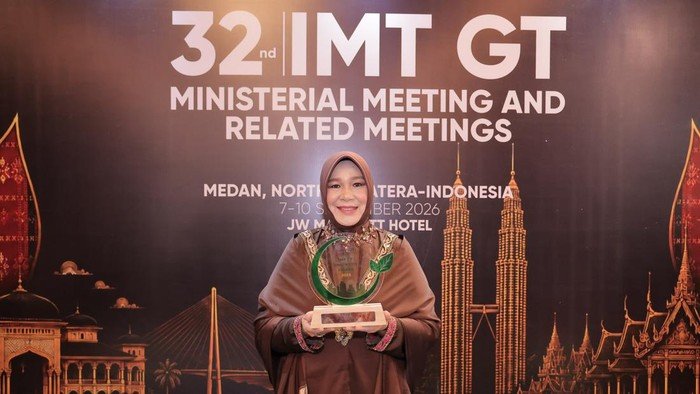
Banda Aceh receives a Silver Award for solid waste management at the first IMT-GT Green City Award, highlighting regional cooperation on sustainable urban development.
MEDAN, Indonesia — Sustainable urban development is increasingly becoming a shared priority across Southeast Asia, as cities face growing challenges related to waste management, climate resilience, resource efficiency and inclusive development. In this regional context, Banda Aceh has received a Silver Award in the Solid Waste Management category at the inaugural IMT-GT Green City Award 2026.
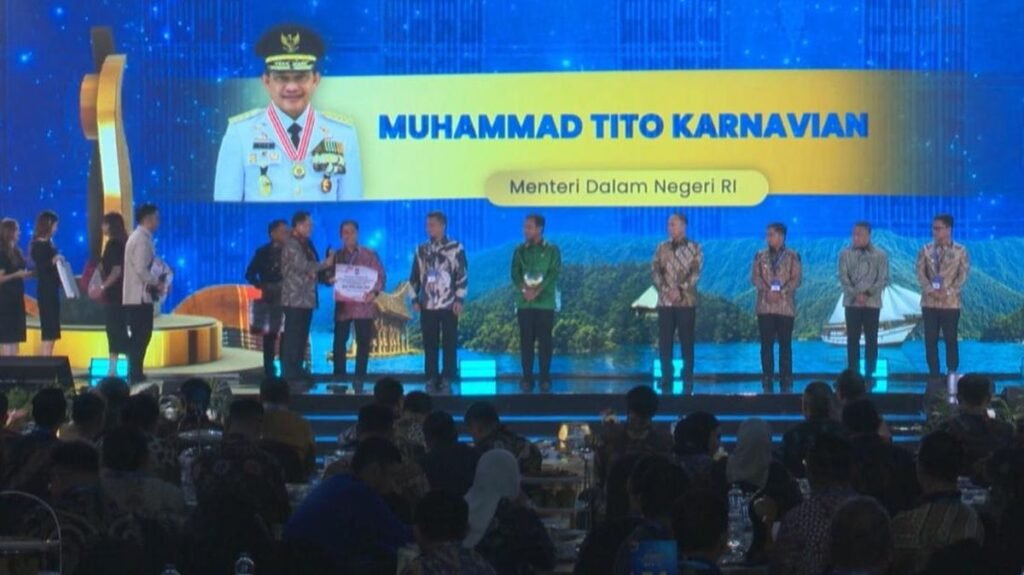
The award was presented to Banda Aceh Mayor Illiza Sa’aduddin Djamal during the Gala Dinner of the 32nd IMT-GT Ministerial Meeting and Related Meetings at JW Marriott Hotel Medan on September 9, 2026. The award was presented by Malaysia’s Minister of Economy, Akmal Nasrullah bin Mohd Nasir.

In the Solid Waste Management category, Manjung Municipality of Malaysia received the Gold Award, Banda Aceh City received the Silver Award, and Pekanbaru City of Indonesia received the Bronze Award. The recognition places local waste-management efforts within a broader subregional framework involving Indonesia, Malaysia and Thailand.
Linking Local Governance with Regional Cooperation
The IMT-GT Green City Award was established to recognise cities demonstrating excellence, innovation and sustained commitment to greener, more inclusive and climate-resilient urban development. The programme covers seven areas, including sustainable transport, energy transition, solid waste management, urban biodiversity, circular economy, climate governance and education for sustainable development.
Importantly, the award is not designed simply as a competition between cities. The official framework positions it as a platform for showcasing achievements, exchanging best practices and promoting deeper cross-border collaboration within the Indonesia-Malaysia-Thailand Growth Triangle, or IMT-GT. It is aligned with the IMT-GT Vision 2036, the Sustainable Urban Development Framework, ASEAN sustainable urbanisation priorities and the United Nations Sustainable Development Goals.
For Banda Aceh, the Silver Award therefore provides recognition within a regional learning environment. Waste management may be implemented at the city level, but many of the underlying challenges — including urban growth, resource efficiency, public participation and environmental resilience — are shared by cities across Southeast Asia.
Waste Management as a Regional Urban Challenge
Waste management has become an increasingly important component of urban sustainability. Rapid urbanisation can place additional pressure on municipal services, while changing consumption patterns can increase the volume and complexity of waste generated by communities.
The IMT-GT award framework reflects this broader perspective by assessing initiatives not only through their impact, but also through sustainability, innovation, scalability and adaptability, governance and participation. These criteria indicate that effective urban environmental policy requires more than infrastructure; it also depends on institutional capacity, innovation and community involvement.
Illiza has emphasised that the recognition should serve as motivation for Banda Aceh to further improve its environmental and waste-management performance. She also highlighted the need for government, communities, businesses and other stakeholders to participate in addressing urban waste challenges.
That emphasis on collaboration is particularly relevant within a regional framework. Urban sustainability policies increasingly require cooperation between public institutions and non-government stakeholders, while cross-border platforms can provide opportunities to exchange practical experiences and approaches.
IMT-GT and the Broader ASEAN Context
IMT-GT was established in 1993 as a subregional cooperation platform covering provinces and states across Sumatra, Peninsular Malaysia and Southern Thailand. Its Vision 2036 seeks to develop the subregion as an integrated, innovative, inclusive and sustainable area. Environment is among the cooperation pillars alongside agriculture, tourism, transport connectivity, trade and investment facilitation, human-resource development and digital transformation.
The Green City Award adds an urban-development dimension to this cooperation architecture. By highlighting city-level initiatives, the programme creates a mechanism through which local governments can contribute to broader regional sustainability objectives.
The first edition also reflects an effort to move from broad regional commitments toward practical examples. The official award framework states that recognised cities can be featured through the IMT-GT Green Cities Best Practice Platform, providing an avenue for wider visibility and knowledge exchange across the subregion.
From Recognition to Continued Improvement
For Banda Aceh, the Silver Award is both a recognition of existing efforts and a reference point for future improvement. Mayor Illiza has stated that the city should not stop at the award, but use it as motivation to strengthen waste management further.
This perspective is consistent with the broader purpose of the IMT-GT Green City Award. Its assessment framework places importance on initiatives that can demonstrate measurable outcomes while remaining active and sustainable over time. Eligible initiatives are required to have been implemented for at least three consecutive years and to demonstrate measurable results.
For regional stakeholders, the experience of Banda Aceh offers an example of how local environmental action can connect with subregional cooperation. As cities across Indonesia, Malaysia and Thailand continue to address common sustainability challenges, the exchange of practical solutions can complement national and regional policy frameworks.
The recognition therefore extends beyond a single municipal achievement. It illustrates how local governments can contribute to the wider sustainability agenda of the IMT-GT region by improving urban services, strengthening participation and developing approaches that may provide lessons for other cities.
As Southeast Asian cities continue to balance economic development with environmental resilience, initiatives such as the IMT-GT Green City Award can provide a platform for turning local experience into regional knowledge. For Banda Aceh, the Silver Award marks one stage in that process — while the continuing challenge remains to translate recognition into sustained improvements for residents and the urban environment.