
The FIFA World Cup 2026 awards highlighted Rodri, Mbappe, Unai Simon and Pau Cubarsi, reflecting leadership, talent development and the changing global football landscape.
ASEANVOICE.COM — The FIFA World Cup 2026 concluded with Spain lifting the trophy after a 1-0 extra-time victory over Argentina, but the tournament also produced a series of individual achievements that underline the changing face of international football.
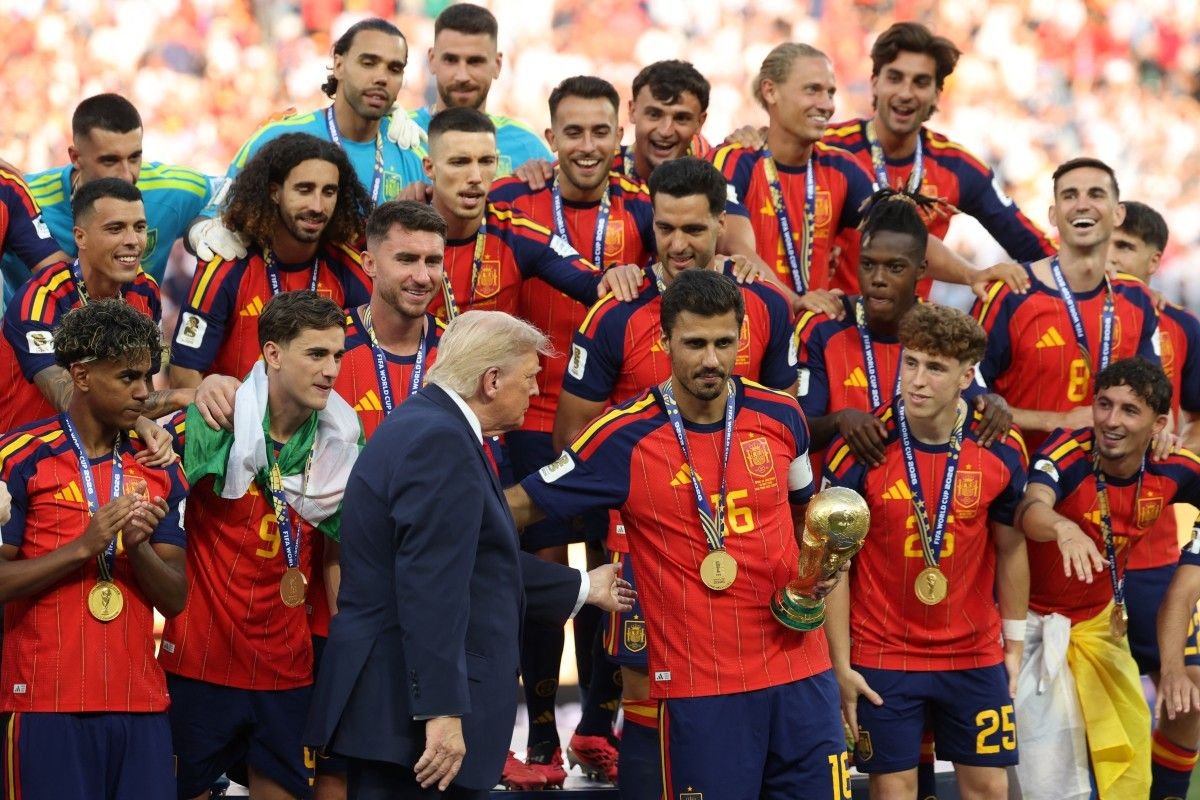
Rodri emerged as the most prominent individual figure after receiving the adidas Golden Ball as the tournament’s best player. His achievement came as Spain secured its second FIFA World Cup title, adding another major chapter to the midfielder’s international career.
Beyond Rodri, the tournament’s individual awards also recognised Kylian Mbappe, Unai Simon and Pau Cubarsi. Mbappe won the adidas Golden Boot after scoring 10 goals in eight matches, while Simon claimed the Golden Glove and Cubarsi was named the FIFA Young Player of the Tournament.
The distribution of the awards offers an interesting perspective for football observers across Southeast Asia. It demonstrates that success at the highest level is increasingly associated not only with scoring ability, but also with midfield control, defensive organisation, youth development and leadership.
Rodri Represents a New Model of Midfield Leadership
Rodri’s Golden Ball is particularly significant because his influence was not based primarily on goals. Instead, the Spanish midfielder operated at the centre of his team’s structure, connecting defence and attack while helping Spain maintain control of matches.
According to FIFA, Rodri completed 101 of 105 passes in the final against Argentina, won 80 per cent of his duels and created two chances. His contribution reflected the importance of midfielders who can influence the rhythm and structure of a match.
His performance also demonstrates why modern football increasingly values players capable of performing multiple tactical functions. For developing football nations, including those in ASEAN, the lesson is relevant: building technically proficient midfielders can be as important as producing prolific forwards.
Rodri’s recognition therefore extends beyond an individual award. It highlights the importance of game intelligence, positional discipline and the ability to make teammates more effective.
Spain’s Success Goes Beyond One Player
Spain’s dominance in the individual awards also reflects the depth of its football development system.
Unai Simon received the adidas Golden Glove after keeping seven clean sheets in eight matches. Spain conceded only one goal throughout the tournament, including a clean sheet in the final against Argentina.
Meanwhile, 19-year-old Pau Cubarsi was named the FIFA Young Player Award winner after playing an important role in Spain’s defensive structure.
The combination is significant. Spain’s success was not built around a single superstar. Instead, the team combined experienced leadership, defensive stability and emerging young talent.
For football development programmes across ASEAN, this provides an important reference point. Sustainable success requires investment across the entire player pathway, from youth development and coaching to tactical education and high-level competition.
Mbappe and the Continuing Power of Individual Excellence
While Spain dominated the tournament as a team, France’s Kylian Mbappe demonstrated the continuing importance of elite individual performance.
The French captain scored 10 goals in eight matches to win the Golden Boot. He also received the adidas Bronze Ball, finishing behind Rodri and Lionel Messi in the tournament’s best-player ranking.
Mbappe’s performance is particularly notable because France did not reach the final. His individual achievement therefore provides a clear distinction between team success and individual excellence.
According to figures reported by Kompas.com, Mbappe’s 2026 campaign took his total World Cup goals to 22, moving him ahead of Lionel Messi’s 21 and making him the leading men’s World Cup goalscorer.
His record illustrates how international tournaments can shape the long-term reputation of players. A single World Cup campaign can influence a player’s global profile, commercial value and place in football history.
A Broader Lesson for ASEAN Football
The 2026 World Cup also offers several lessons for football development in Southeast Asia.
ASEAN football has continued to invest in youth academies, professional leagues and national-team programmes. However, the gap between emerging football markets and the world’s most developed systems remains significant.
Spain’s success demonstrates the value of continuity. Developing players capable of competing at the highest level requires more than short-term recruitment or isolated investment. It requires a long-term ecosystem involving grassroots programmes, qualified coaches, competitive domestic leagues and pathways to international competition.
The emergence of Cubarsi alongside established figures such as Rodri also demonstrates the importance of combining experience with youth. For ASEAN football associations, developing this balance could be critical to creating stronger national teams over the next decade.
Football’s Global Commercial and Cultural Reach
The scale of the 2026 World Cup further underlines football’s growing global influence.
The tournament was jointly hosted by Canada, Mexico and the United States and became the first World Cup involving 48 teams and 104 matches. FIFA reported total attendance of 6,810,966 spectators, with 308 goals scored across 16 stadiums during the 39-day tournament.
For ASEAN markets, the growing scale of global football creates opportunities extending beyond the pitch. Broadcasting, sponsorship, sports technology, tourism, merchandise, digital media and fan engagement are increasingly interconnected.
The rise of football audiences across Indonesia, Thailand, Vietnam, Malaysia, Singapore and the Philippines also means that major international tournaments have become important platforms for regional brands seeking global visibility.
Awards as a Reflection of Football’s Changing Priorities
The complete list of individual awards reinforces the increasingly diverse definition of excellence in modern football.
Rodri won the Golden Ball, Messi received the Silver Ball, Mbappe the Bronze Ball and Golden Boot, while Messi also claimed the Silver Boot. Jude Bellingham received the Bronze Boot, Unai Simon won the Golden Glove, Cubarsi was named Best Young Player and the Netherlands received the FIFA Fair Play Trophy.
The list covers leadership, scoring, goalkeeping, youth development and sportsmanship. Together, these categories demonstrate that international football increasingly recognises different forms of contribution.
For ASEAN football, this is perhaps the most valuable message from the 2026 tournament. Developing a successful football culture should not focus exclusively on producing goal scorers. It should also create intelligent midfielders, reliable defenders, elite goalkeepers, disciplined teams and young players capable of adapting to international standards.
Building the Next Generation
Spain’s triumph ultimately provides a useful case study in how football development can translate into international success.
Rodri represents leadership and tactical intelligence. Simon demonstrates consistency in goal. Cubarsi represents the emergence of a new generation. Mbappe, meanwhile, demonstrates how individual excellence can continue to define an era even when a team falls short of winning the title.
For Southeast Asia, these stories provide more than sporting inspiration. They highlight the importance of long-term planning, player development and institutional consistency.
The future of ASEAN football will depend not only on discovering talented players, but also on creating the systems that allow those players to reach their full potential.
The 2026 World Cup has therefore left behind more than a list of award winners. It has provided a global reference point for how modern football talent is developed, evaluated and celebrated.
As ASEAN football continues its journey toward greater international competitiveness, the achievements of Rodri, Mbappe, Simon and Cubarsi offer different models of excellence—each demonstrating that global success is ultimately built through talent, discipline, leadership and sustained development.