

Indonesia is reviewing more than 100 nominations for state service and honorary awards, highlighting public contributions and the country’s institutional recognition process.
Indonesia is currently reviewing more than 100 names proposed for state service medals and honorary distinctions, in a process that highlights the country’s institutional approach to recognizing contributions to society and the nation.
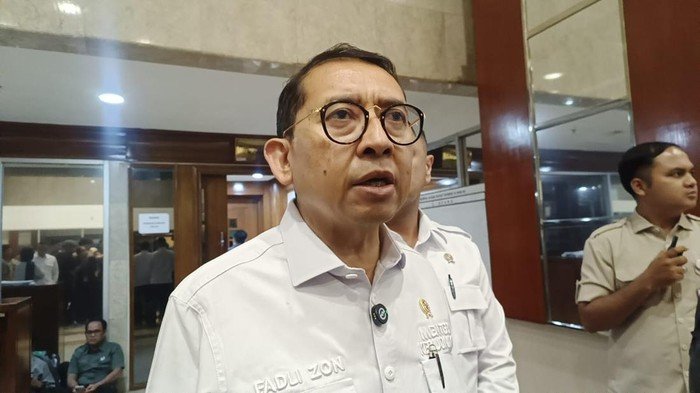
The development was disclosed by Minister of Culture Fadli Zon, who also serves as Chairman of Indonesia’s Council for Titles, Services and Honors. Fadli reported the proposals to President Prabowo Subianto during a meeting in Hambalang, Bogor, on September 1, 2026. The proposals originated from ministries, government institutions and members of the public.
The proposed recipients come from different professional and social backgrounds. According to government information, the assessment considers contributions, services and benefits provided to society, the nation and the state, while an individual’s record of service is also taken into account.
Importantly, the current list should not be interpreted as a final list of recipients. The proposals remain part of an institutional review process, with the submitted recommendations serving as material for presidential consideration. Any final decision is to be made in accordance with applicable laws and regulations.
Indonesia’s system for state recognition is governed by a formal institutional framework. The Council for Titles, Services and Honors is established under Law No. 20 of 2009 and Government Regulation No. 1 of 2010. Its responsibilities include examining, discussing and verifying proposals before providing recommendations to the President.
The framework also defines state service medals as national awards granted by the President to individuals considered to have made exceptional contributions and achievements in advancing particular fields of significant benefit to the nation and state. Proposals can originate from state institutions, ministries, government agencies, regional governments, organizations, individuals or community groups.
From an ASEAN perspective, the process illustrates how national systems of recognition can serve a broader public function. Contributions in areas such as culture, healthcare, education, science, public service and other sectors often extend beyond individual achievement and can contribute to social development and institutional capacity.
For Indonesia, the discussion surrounding more than 100 proposed names therefore goes beyond the number itself. It reflects an ongoing process through which contributions from different segments of society are brought into a formal state mechanism for review and consideration.
The distinction between nomination and final recognition is particularly important. Until the relevant procedures have been completed and a decision is formally issued, the names remain proposals rather than confirmed recipients. This approach allows the recognition process to remain connected to established legal and institutional standards.
As Indonesia continues to strengthen its role within ASEAN, mechanisms for recognizing public contribution can also form part of the broader conversation on governance, civic participation and national development. The current review provides another example of how individual contributions are brought into a structured process of institutional recognition.