
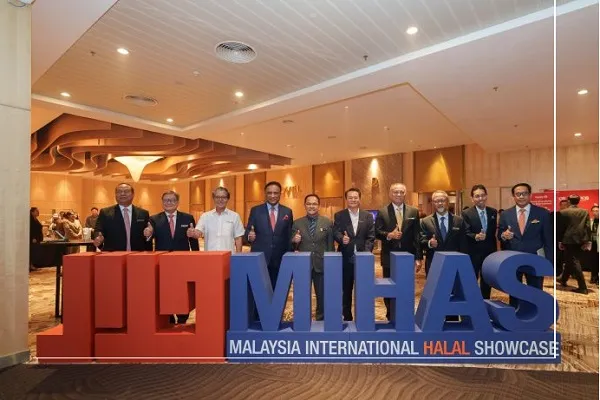
MIHAS Awards 2026 highlights business excellence, innovation, sustainability and digitalisation while strengthening ASEAN’s position in the global halal economy.
KUALA LUMPUR — The development of the global halal economy is increasingly connected to the strength of regional trade networks, technological innovation and cross-border business cooperation. Against this backdrop, the Malaysia International Halal Showcase (MIHAS) Awards 2026 has placed business excellence, innovation, sustainability and digitalisation at the centre of its recognition programme.
Organised in conjunction with MIHAS, the awards recognise exhibitors demonstrating strong business performance, product and service quality, market potential and innovative capabilities. The programme also highlights businesses that are adopting sustainable practices and digital technologies as part of their growth strategies.
The significance of MIHAS extends beyond Malaysia’s domestic halal industry. MATRADE describes MIHAS as a global trade platform connecting halal industry players, exporters and international buyers. The 2026 edition, its 22nd, was held from 23 to 26 September at the Malaysia International Trade and Exhibition Centre (MITEC) in Kuala Lumpur.
For ASEAN, such a platform provides an important avenue for businesses to explore opportunities beyond their respective national markets. Southeast Asia has a large Muslim consumer base, established manufacturing networks and increasingly integrated trade relationships. The combination creates an environment in which halal products and services can develop regional supply chains while also targeting markets outside ASEAN.
The awards themselves reflect the changing nature of competition within the halal economy. The MIHAS Excellence Awards focus on product excellence, service excellence and emerging businesses, while the Innovation, Sustainability & Digitalisation Awards recognise companies applying technologies and forward-looking practices to strengthen their operations and market competitiveness.
This evolution is particularly relevant to ASEAN businesses. Companies operating in food and beverages, pharmaceuticals, personal care, modest fashion, technology, Islamic finance and other halal-related sectors increasingly compete on more than certification. Product quality, traceability, digital commerce, efficient supply chains and brand positioning are becoming important elements of international market access.
Technology is also changing how halal businesses interact with consumers and business partners. MIHAS identifies artificial intelligence, automation, Internet of Things, blockchain, halal traceability and digital commerce among the technologies relevant to its innovation and digitalisation recognition.
For regional companies, digitalisation can help reduce some of the barriers associated with cross-border expansion. Digital platforms can support customer engagement, business-to-business transactions, supply-chain visibility and access to new markets. At the same time, companies must ensure that technological adoption is supported by appropriate governance, product quality and compliance practices.
Another important dimension is women’s participation in international trade. The WiEX Award, or Anugerah Wira Ekonomi Wanita, recognises women-led businesses participating in the WiEX Pavilion and covers areas including products, services, innovation, sustainability and digitalisation.
The WiEX programme also connects participating companies with international buyers through MIHAS’s International Sourcing Programme. MATRADE said the 2026 programme brought 300 buyers from various countries and aimed to facilitate more than 120 business-matching sessions for companies participating in the WiEX Pavilion.
Such initiatives are relevant to ASEAN’s broader efforts to expand participation in international trade. Small and medium-sized enterprises remain an important part of regional economies, and access to buyers, networks and market intelligence can help businesses move from domestic operations toward internationalisation.
The regional dimension is also visible in Malaysia’s wider trade strategy. MATRADE reported that Malaysia’s trade with ASEAN reached RM89.31 billion in August 2026, representing 25.2 per cent of Malaysia’s total trade for the month. Exports to ASEAN rose 40.2 per cent year-on-year to RM52.44 billion.
These figures provide a broader context for understanding why platforms such as MIHAS matter to the region. Strong intra-ASEAN trade creates opportunities for companies to establish partnerships within Southeast Asia before expanding further into international markets.
The halal economy can benefit from this regional connectivity because its value chain crosses multiple sectors and countries. Raw materials, manufacturing, certification, logistics, financing, digital platforms and distribution can involve different markets. Greater cooperation among businesses and institutions can therefore contribute to more resilient regional supply networks.
MIHAS also provides an avenue for Malaysia to position itself as a hub connecting ASEAN companies with wider international markets. MATRADE has stated that MIHAS is designed to connect businesses with opportunities across the global halal value chain and provide access to OIC markets and beyond.
For ASEAN companies, the message from MIHAS Awards 2026 is therefore broader than the recognition of individual businesses. It points to a competitive environment in which regional companies are expected to combine halal compliance with quality, innovation, sustainability, technology and international market readiness.
As the global halal economy continues to expand, ASEAN’s position will depend partly on how effectively its businesses can connect domestic capabilities with international demand. Platforms such as MIHAS can support that process by bringing exporters, buyers, policymakers and industry stakeholders into the same commercial ecosystem.
The MIHAS Awards 2026 ultimately illustrates how the halal economy is evolving from a sector defined primarily by compliance into a broader international business ecosystem. For ASEAN, this evolution creates opportunities to strengthen intra-regional trade, develop innovative enterprises and build stronger connections with global halal markets.