

Prof. Bambang Karsono Receives Asia Impact Leaders Award 2026 | UBHARA JAYA Rector
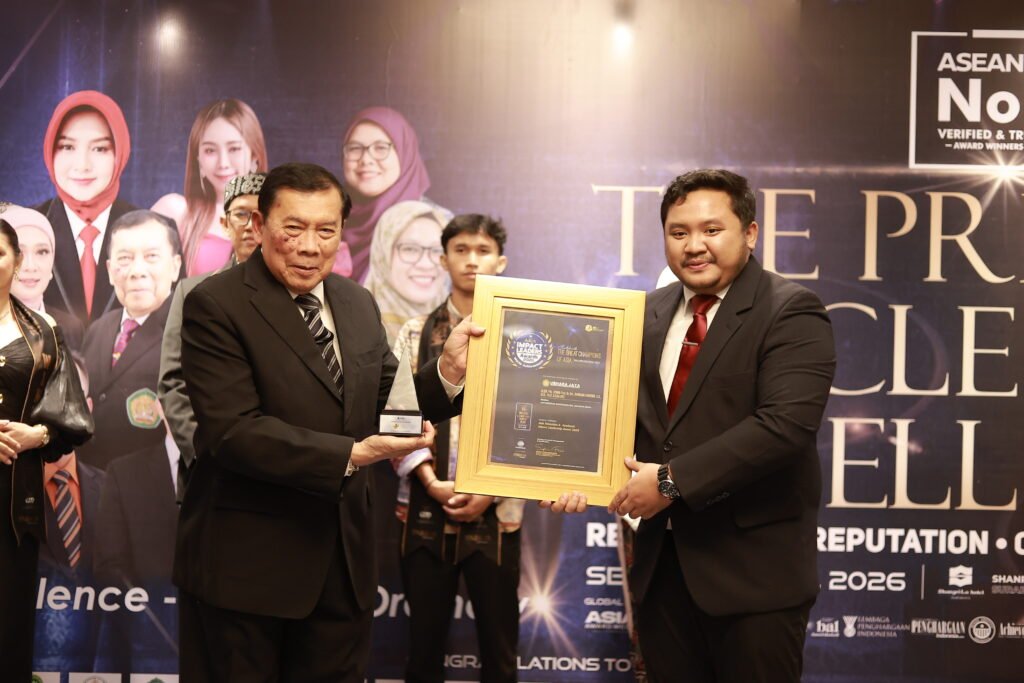
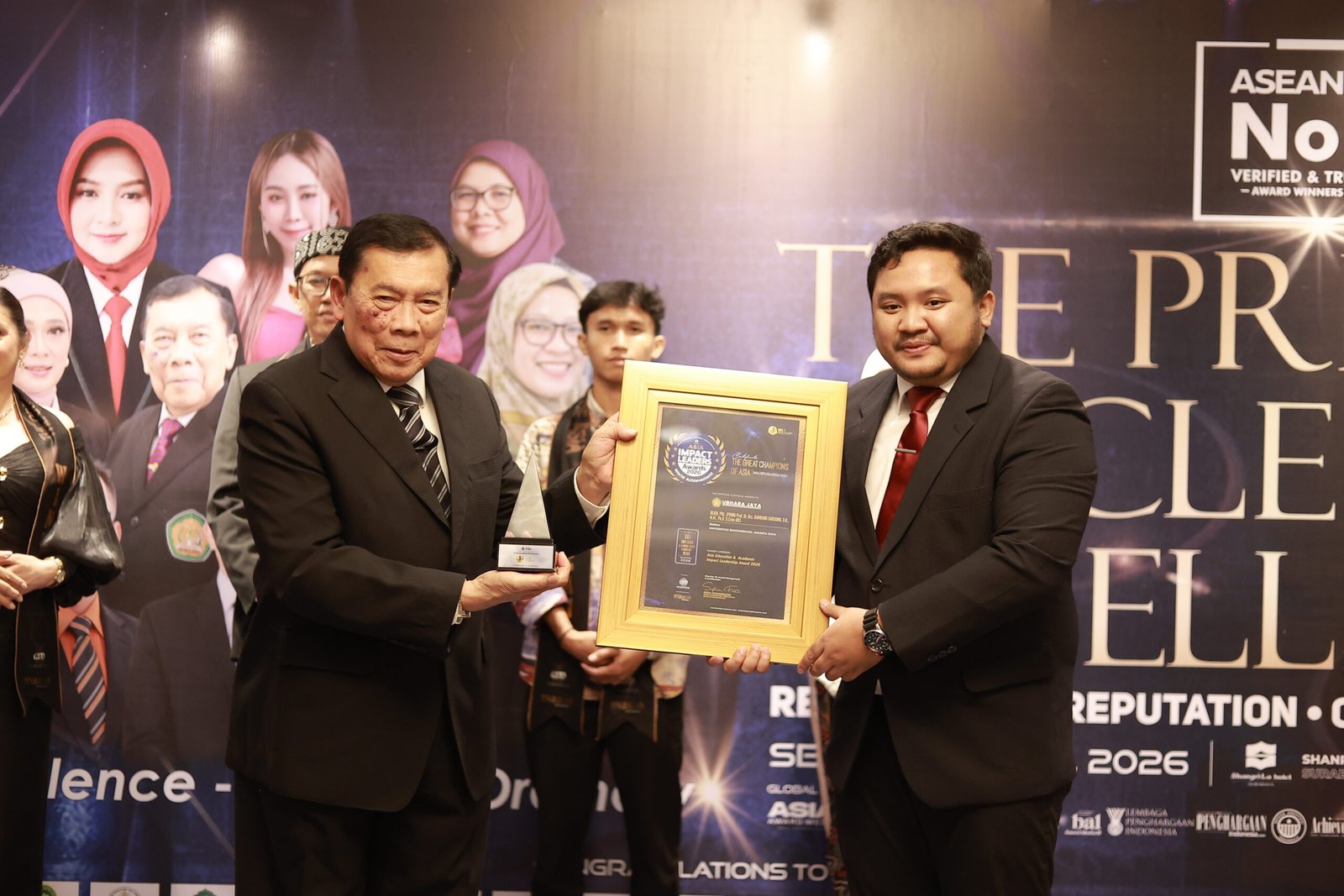
Prof. Bambang Karsono, Rector of Universitas Bhayangkara Jakarta Raya, receives the Asia Impact Leaders Award 2026 from the World Achievement Association, highlighting university leadership, academic quality, and workforce development in ASEAN.
Recognising Leadership in Indonesia’s Higher Education Sector
SURABAYA, INDONESIA — Higher education institutions across Southeast Asia are navigating an increasingly complex environment shaped by technological transformation, changing workforce requirements, and growing expectations for academic quality.

Universities are being called upon to prepare graduates who possess not only academic knowledge but also the adaptability, professional competencies, and critical thinking skills required in modern economies.
Against this regional backdrop, Irjen. Pol. (Ret.) Prof. Dr. Drs. Bambang Karsono, S.H., M.M., Ph.D., D.Crim (HC), Rector of Universitas Bhayangkara Jakarta Raya (UBHARA JAYA), has received the Asia Impact Leaders Award 2026.
The recognition was presented by the World Achievement Association (WAA) during an awards programme held on Saturday, 12 September 2026, at Shangri-La Hotel, Surabaya, Indonesia.
The programme was led by GP Rajasa Pranadewa and recognised professional leadership across different sectors.
For Prof. Bambang Karsono, the award marks another milestone in a career spanning public service and higher education leadership.
His current responsibilities as Rector of UBHARA JAYA place him at the intersection of institutional governance, academic development, and the preparation of future professionals.
A Leadership Journey from Public Service to Academia
Prof. Bambang Karsono brings a professional background as a retired Inspector General of the Indonesian National Police.
His transition into university leadership represents a shift between two institutions with distinct responsibilities and organisational cultures.
While policing focuses on public security and law enforcement, higher education institutions are responsible for teaching, research, academic inquiry, and community engagement.
University leadership therefore requires an approach that accommodates academic independence, institutional collaboration, and the diverse interests of students, lecturers, researchers, and administrative personnel.
As Rector of UBHARA JAYA, Prof. Bambang Karsono is responsible for guiding the university’s institutional direction while supporting the development of its academic community.
His professional journey provides an example of leadership responsibilities extending across different sectors of public and institutional life.
Renewed Mandate for the 2026–2030 Term
On 31 March 2026, Prof. Bambang Karsono was formally inaugurated for another term as Rector of UBHARA JAYA, covering the period from 2026 to 2030.
The inauguration was conducted by the Brata Bhakti Foundation at the university’s Grha Tanoto Auditorium, Campus II, in Bekasi, West Java.
The appointment was based on a formal foundation decision dated 13 March 2026.
The renewed mandate provides an opportunity for institutional continuity while introducing further responsibilities for academic development.
For universities, leadership continuity can support the implementation of long-term strategies, particularly in areas such as academic quality assurance, research development, infrastructure planning, and external partnerships.
However, continuity also requires regular evaluation to ensure that existing programmes remain effective and responsive to changing needs.
For UBHARA JAYA, the 2026–2030 leadership period coincides with broader developments affecting higher education throughout Southeast Asia.
Strengthening Institutional Quality and Academic Standards
According to the university’s official communications, UBHARA JAYA has achieved Unggul, the highest institutional accreditation classification within Indonesia’s applicable higher education accreditation framework.
Accreditation is an important component of educational quality assurance.
It evaluates institutional performance against established standards and provides a formal reference for students, families, and other stakeholders.
For universities in ASEAN, quality assurance is also relevant to broader discussions concerning academic standards, educational transparency, and confidence in higher education institutions.
Nevertheless, accreditation should be understood as one component of institutional quality rather than a substitute for continuous improvement.
Universities must continue developing teaching quality, research capabilities, student services, and governance systems.
Maintaining academic standards requires sustained commitment across the institution, involving university leaders, faculties, lecturers, administrative personnel, and students.
Connecting Universities with Workforce Development
One of the most significant challenges facing higher education institutions is ensuring that graduates are prepared for changing labour market requirements.
Across ASEAN, technological adoption, digital services, industrial restructuring, and the growth of knowledge-based activities are influencing the skills employers seek.
Graduates increasingly need to combine specialised academic knowledge with communication, analytical thinking, digital literacy, and the capacity to learn throughout their careers.
In this context, cooperation between universities and institutions responsible for workforce development can provide valuable opportunities.
On 19 June 2026, UBHARA JAYA signed a memorandum of understanding with Indonesia’s Ministry of Manpower.
The signing ceremony took place at the university’s Campus II in Bekasi and involved Prof. Bambang Karsono and the ministry’s Secretary-General, Dr. Cris Kuntadi, S.E., M.M.
The cooperation was intended to support education, research, and community engagement.
Such partnerships can create opportunities for academic institutions to better understand employment trends and the competencies required by professional sectors.
However, the effectiveness of institutional cooperation ultimately depends on the programmes implemented and the outcomes achieved.
Human Capital Development as a Regional Priority
Human capital development remains central to Southeast Asia’s long-term economic and social progress.
ASEAN member states operate within different education systems and labour market conditions, but many face common challenges in preparing graduates for technological change and evolving professional expectations.
Universities have an important role in responding to these developments.
They provide academic education, support research, and contribute to the development of professional skills.
For institutions such as UBHARA JAYA, cooperation with government agencies and other stakeholders can help strengthen the connection between academic programmes and practical workforce needs.
Nevertheless, international relevance should not be assumed solely from the existence of domestic partnerships.
Evidence of graduate outcomes, educational quality, and sustained institutional cooperation remains essential when evaluating a university’s contribution.
Building Effective University Governance
Higher education institutions are complex organisations.
They must coordinate academic programmes, research activities, student development, financial administration, and external relations.
Effective governance therefore requires clear responsibilities and coordination among different levels of leadership.
On 12 May 2026, Prof. Bambang Karsono inaugurated two university officials as part of UBHARA JAYA’s leadership arrangements.
Dr. Yayan Hendayana, S.E., M.M., was appointed Vice Rector III, while Dr. Dovina Navanti, S.T., M.M., was appointed Dean of the Faculty of Economics and Business.
Such organisational appointments form part of the institutional management processes needed to support university operations.
Leadership structures can help distribute responsibilities, but their effectiveness depends on communication, accountability, and the implementation of academic priorities.
For universities facing increasing demands, governance capacity is an important factor in sustaining institutional performance.
Developing Academic Identity Through Research
Universities contribute to society not only through teaching but also through the production and application of knowledge.
UBHARA JAYA has developed academic interests and research activities related to national security, police studies, anti-corruption, and national defence awareness.
These fields reflect elements of the university’s institutional identity.
Research in such areas can contribute to academic discussion and the study of public institutions and societal challenges.
For ASEAN, research cooperation and knowledge exchange are relevant to strengthening the region’s intellectual and institutional capacity.
However, the contribution of research centres and academic programmes should be evaluated through their activities, research outputs, scholarly quality, and engagement with relevant communities.
Institutional reputation is strengthened when academic priorities are supported by demonstrable results.
Preparing Graduates for a Digital Future
Digital transformation is changing the way universities teach, conduct research, and manage their operations.
Artificial intelligence, digital learning platforms, and data-driven systems present opportunities to improve educational delivery.
At the same time, they introduce questions concerning academic integrity, data protection, equitable access, and the responsible use of technology.
Universities must therefore develop digital capabilities while preserving the principles of academic quality.
For students, digital literacy increasingly involves more than the ability to use software.
It also requires critical thinking, responsible decision-making, and an understanding of how technology affects professional practice.
For lecturers and university administrators, digital transformation demands ongoing professional development and organisational adaptation.
These challenges are relevant to higher education institutions across ASEAN, including UBHARA JAYA.
Professional Recognition and Institutional Reputation
During 2026, Prof. Bambang Karsono was also named as a recipient of several professional leadership awards.
In February, he received the Best Transformational Leader in Private Higher Education 2026 recognition.
In May, he received The Most Impactful Leadership in Enhancing University’s Reputation of The Year 2026.
The Asia Impact Leaders Award 2026 from the World Achievement Association adds another recognition to his professional record.
These awards were organised by different institutions and should be understood within their respective programmes.
Professional awards may contribute to public awareness of leadership activities, but they are distinct from official accreditation, government assessments, or comprehensive independent evaluations of university performance.
Long-term institutional reputation depends on the quality of academic programmes, governance, research, and contributions to society.
Leadership and the Future of ASEAN Higher Education
As Southeast Asian economies continue to evolve, universities face increasing expectations to prepare graduates for uncertain and changing professional environments.
Academic institutions must balance specialised education with broader competencies such as adaptability, communication, ethical judgement, and lifelong learning.
They must also strengthen research, maintain academic standards, and develop meaningful partnerships.
For Prof. Bambang Karsono, the renewed leadership mandate at UBHARA JAYA provides an opportunity to address these challenges through institutional development.
The university’s documented accreditation achievement, governance appointments, and cooperation with the Ministry of Manpower represent areas relevant to its continuing development.
The long-term impact of these initiatives will depend on implementation, evaluation, and the benefits delivered to students and the wider community.
From National Recognition to Regional Relevance
The Asia Impact Leaders Award 2026 represents a moment of professional recognition for Prof. Bambang Karsono in his capacity as Rector of Universitas Bhayangkara Jakarta Raya.
His career, extending from public service to higher education, reflects the changing responsibilities that can accompany institutional leadership.
For UBHARA JAYA, the broader priority remains the development of academic quality, research capacity, and opportunities for students.
Within ASEAN, the relevance of higher education leadership is increasingly connected to the ability of universities to prepare skilled graduates and respond to economic and technological transformation.
Ultimately, the lasting contribution of university leadership is measured not only through professional recognition, but through the knowledge, opportunities, and institutional capabilities developed for future generations.
From Jakarta’s higher education landscape to a professional recognition event in Surabaya, Prof. Bambang Karsono’s leadership journey provides a perspective on the continuing role of universities in supporting human capital development across Southeast Asia.