
FEB Universitas Negeri Malang’s achievements at INSYMA 2025 in Vietnam highlight academic exchange, sustainability research and emerging management issues across ASEAN.
MALANG, Indonesia — Academic exchange across Southeast Asia continues to create opportunities for universities to share research, perspectives and solutions to common economic and management challenges. One recent example came from the Faculty of Economics and Business at Universitas Negeri Malang (FEB UM), whose students and academic staff received international recognition at the 22nd International Symposium on Management (INSYMA) 2025 in Vietnam.
Held in Ho Chi Minh City from 12 to 15 May 2025, INSYMA brought together academics and practitioners to discuss developments in management and business. The forum provided an international setting for researchers to present studies addressing issues that are increasingly relevant across Southeast Asian economies.
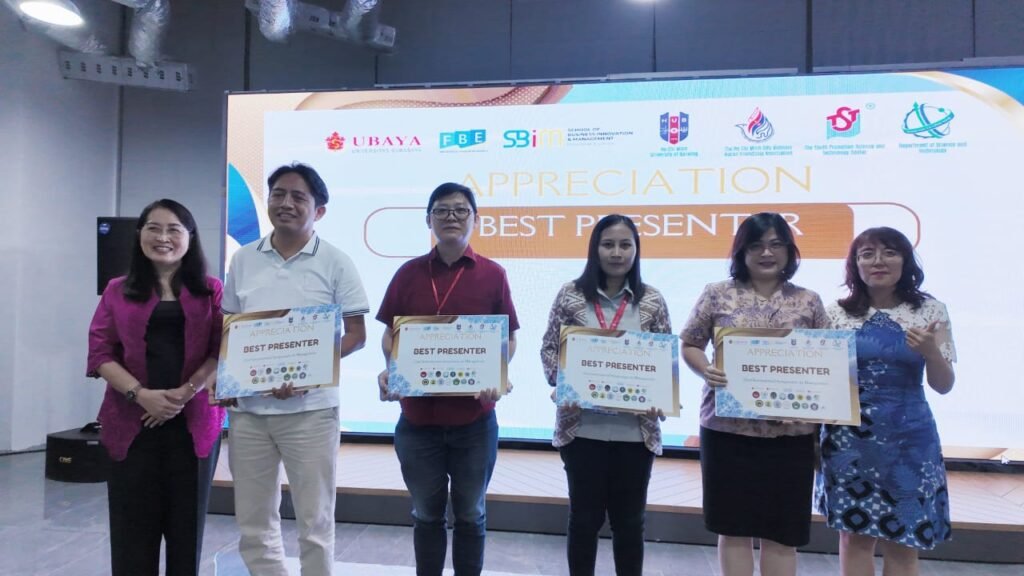
FEB UM’s delegation received several awards during the event. Master’s students Lili Purwanitasari and Yohanes Wibisono were recognised as Best Presenter, while FEB UM professor Wahjoedi, M.E. received two Best Paper recognitions.
Lili Purwanitasari presented research examining the role of green marketing in driving the circular economy, using a systematic literature review and bibliometric analysis based on Scopus data. The subject reflects a broader shift in business research as companies and policymakers across the region increasingly consider environmental sustainability alongside economic performance.
For ASEAN economies, the relationship between economic growth and environmental sustainability is particularly relevant. Countries across the region are dealing with questions surrounding resource efficiency, responsible consumption, sustainable production and the transition toward greener business practices.
Another FEB UM presentation addressed changes in the modern workplace. Yohanes Wibisono examined the relationship between flexible work arrangements, job autonomy, work engagement and employee performance.
The topic is increasingly relevant as businesses across Southeast Asia adapt to changing employment patterns and the wider use of digital technologies. While working arrangements differ across countries and industries, organisations face a common challenge: maintaining productivity and employee engagement while responding to new expectations surrounding workplace flexibility.
The third research contribution came from Wahjoedi, whose study examined the effectiveness of training in supporting diversification and digitalisation among butterfly pea flower micro, small and medium enterprises (MSMEs) in Tuban, Indonesia.
MSMEs are a major component of Southeast Asian economies, making research on digitalisation and business diversification particularly relevant to the region. Strengthening the capabilities of smaller businesses can contribute to wider participation in digital markets while supporting local economic development.
The topics presented by FEB UM researchers therefore extend beyond individual academic interests. Green marketing, circular economy, flexible work, employee engagement, MSME digitalisation and business diversification are issues that can be examined through a broader ASEAN perspective.
INSYMA’s 22nd edition also reflected the growing importance of technology in management research. Its central theme, “Leveraging AI to Build Competitive Advantage in Financial Industries,” placed artificial intelligence and competitiveness within the discussion of contemporary financial industries.
For universities in ASEAN, international forums such as INSYMA provide more than opportunities to present research. They create channels for academics from different countries to exchange perspectives, identify common challenges and explore potential areas for future cooperation.
The participation of FEB UM also illustrates how Indonesian universities can contribute research grounded in local experiences to wider regional discussions. Studies focused on Indonesian businesses and communities can offer insights that may be relevant to other Southeast Asian economies facing comparable challenges.
Academic recognition at an international forum is consequently one part of a broader process. The longer-term value lies in maintaining research collaboration, strengthening academic networks and translating knowledge into practical contributions for institutions, businesses and communities.
As Southeast Asia continues to navigate digital transformation, sustainability pressures and changes in the world of work, cross-border academic engagement will remain an important part of the region’s knowledge ecosystem. The experience of FEB UM in Vietnam represents one example of how Indonesian researchers and students are participating in that continuing regional conversation.