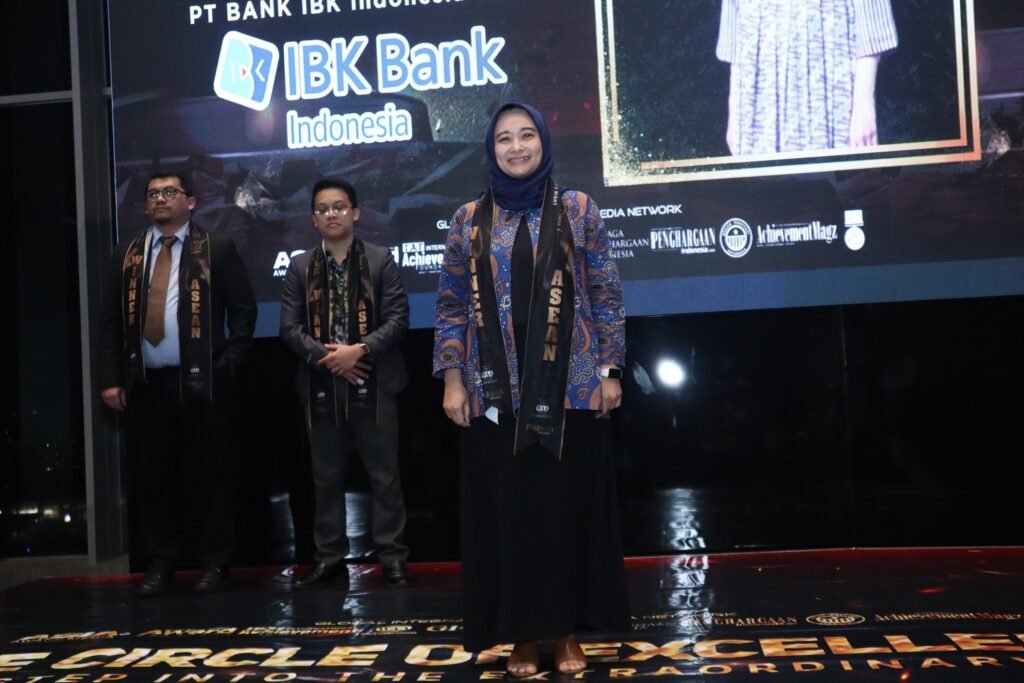



Basaria Martha Juliana of Bank Jakarta receives the 2026 Influential Women Appreciation for strategic finance, business transformation, and inclusive leadership.
JAKARTA — The growing presence of women in strategic positions across Southeast Asia’s financial sector is increasingly reflected in corporate leadership, business transformation, and economic development. In Indonesia, Basaria Martha Juliana, Director of Finance & Strategy at Bank Jakarta, has recently received the 2026 Influential Women Appreciation for her role in strategic finance and business transformation.
Basaria received the award in the Economic Empowerment for Strategic Finance & Business Transformation category at Sraya Nusa 2026. The award recognizes women considered to have made meaningful contributions through their professional roles and broader impact. The selection process considered professional track records, contributions, achievements, influence, and the relevance of each candidate’s work to the values promoted by the 2026 program.

For Indonesia’s financial industry, the recognition comes at a time when banking institutions are navigating changes in technology, customer expectations, organizational capabilities, and business models. Finance leadership is consequently becoming increasingly connected with broader corporate strategy, rather than being limited to financial reporting and control.
Basaria has linked her recognition to Bank Jakarta’s commitment to diversity, equity and inclusion (DEI). She said the award reflects the importance of women’s representation, particularly in strategic positions within the financial industry. She also highlighted the need to provide opportunities for women to contribute to transformation and sustainable growth.
Her perspective is relevant beyond the Indonesian market. Across ASEAN, financial institutions operate within increasingly interconnected economies where talent development, digital transformation, governance, and inclusive participation are important components of long-term competitiveness.
Basaria’s professional background also provides context for her current role. According to Beritajakarta, she has held several strategic positions in financial institutions and led strategic projects, including work related to corporate development and transformation. She also served as Finance Director of PT Danareksa Holding during the 2023–2025 period.
At Bank Jakarta, her responsibilities intersect with the institution’s broader transformation agenda. Basaria has said that the bank continues to strengthen leadership capabilities and develop executive profiling, including in preparation for corporate actions and continued transformation across different areas of the organization.
The role of leadership development is particularly relevant for financial institutions operating in a rapidly changing regional environment. Technology may transform customer access to financial services, but organizational readiness, human resources, risk management, and leadership capacity remain important factors in translating transformation strategies into sustainable business outcomes.
Bank Jakarta’s collaboration with the Bandung Institute of Technology (ITB) offers another example of this broader approach. In August 2026, Basaria signed a memorandum of understanding with ITB concerning the utilization of banking services and products for education, research, community service, and human resource development. Bank Jakarta described the partnership as an initial step toward building an adaptive, competent, innovative, and globally competitive ecosystem.
The collaboration also illustrates how financial institutions can engage with the development of human capital. For ASEAN economies, strengthening links between financial institutions, universities, research institutions, and businesses can contribute to the development of skills required by increasingly digital and knowledge-based economies.
From a regional perspective, the participation of women in senior financial positions is also connected with broader discussions about inclusive economic development. Leadership diversity can be viewed not only through the number of women occupying executive positions, but also through their involvement in strategic decision-making, organizational transformation, and the development of economic ecosystems.
Basaria’s recognition therefore carries significance within a wider professional context. Her award does not stand separately from her executive responsibilities; instead, it comes alongside her role in finance and strategy at Bank Jakarta and her involvement in initiatives related to transformation, leadership development, and institutional collaboration.
For Bank Jakarta, the emphasis on inclusion and strategic leadership forms part of an organizational response to a financial sector that continues to evolve. For Indonesia, the development of women leaders in finance contributes to the wider conversation about professional opportunities, corporate governance, and economic participation.
The regional dimension is equally relevant. ASEAN economies differ in their financial structures and regulatory environments, but they share common challenges involving digitalization, human capital, sustainable growth, and the need for resilient financial institutions. Experiences from individual markets can therefore provide useful perspectives for broader regional discussions.
Basaria Martha Juliana’s 2026 recognition places her professional journey within that evolving landscape. Her role at Bank Jakarta illustrates how finance leadership can intersect with transformation, organizational development, inclusion, and institutional partnerships.
As Southeast Asia continues to strengthen economic connectivity, the ability of financial institutions to develop capable and diverse leadership will remain an important part of the region’s corporate development. Basaria’s recognition provides one example from Indonesia of how women executives are participating in that process from strategic positions within the financial sector.