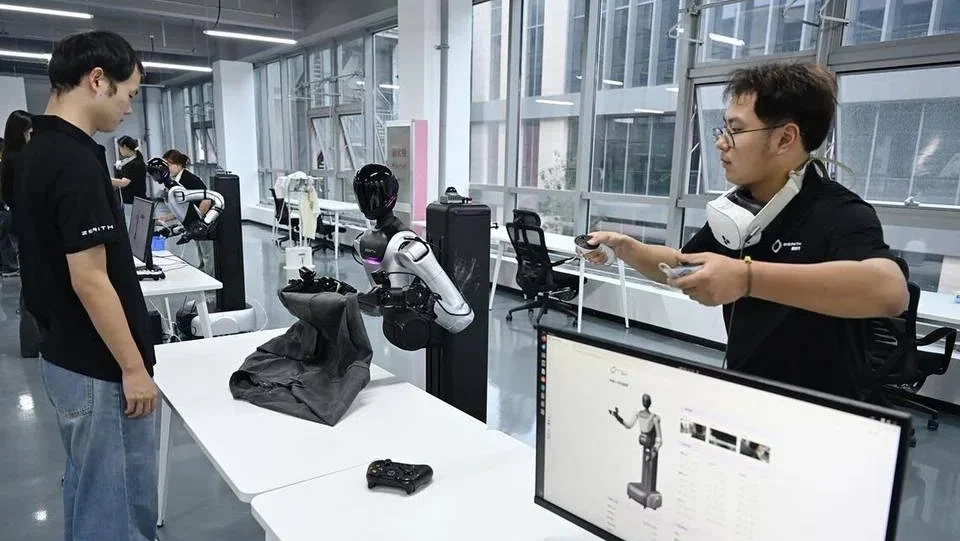
Singapore — Humanoid robots are often hailed as the next frontier in artificial intelligence, yet their development faces a critical obstacle: data. According to The Business Times, China has begun establishing specialized training centres to address this gap, aiming to provide humanoid robots with the vast and diverse datasets they need to function effectively.
Unlike conventional AI systems that rely on abundant text, image, and video data, humanoid robots require real‑world interaction data—from movement patterns to environmental responses. This scarcity has slowed progress, leaving even advanced prototypes struggling with basic tasks. China’s initiative seeks to bridge this divide by creating controlled environments where robots can learn through repeated, supervised experiences.
For ASEAN, the development carries significant implications. As the region accelerates digital transformation, humanoid robotics could play a role in industries ranging from healthcare and eldercare to manufacturing and logistics. However, the challenge of data availability is not unique to China. ASEAN nations must also consider how to build ecosystems that support safe, ethical, and effective robot training.
Regional collaboration could prove vital. Shared research centres, cross‑border data initiatives, and harmonized standards would allow ASEAN to leverage collective strengths while ensuring that humanoid robotics align with local cultural and social contexts. Moreover, ASEAN’s diverse environments—from dense urban centres to rural communities—offer unique opportunities to generate varied datasets that enrich robot learning.
Analysts caution that while humanoid robots promise efficiency and innovation, they also raise questions about privacy, employment, and safety. Addressing these concerns requires not only technical solutions but also inclusive policymaking that balances innovation with societal well‑being.
Ultimately, China’s training centres highlight both the promise and the hurdles of humanoid robotics. For ASEAN, the lesson is clear: success in this field will depend not just on technology, but on regional synergy, ethical foresight, and the ability to turn challenges into opportunities for collective progress.