

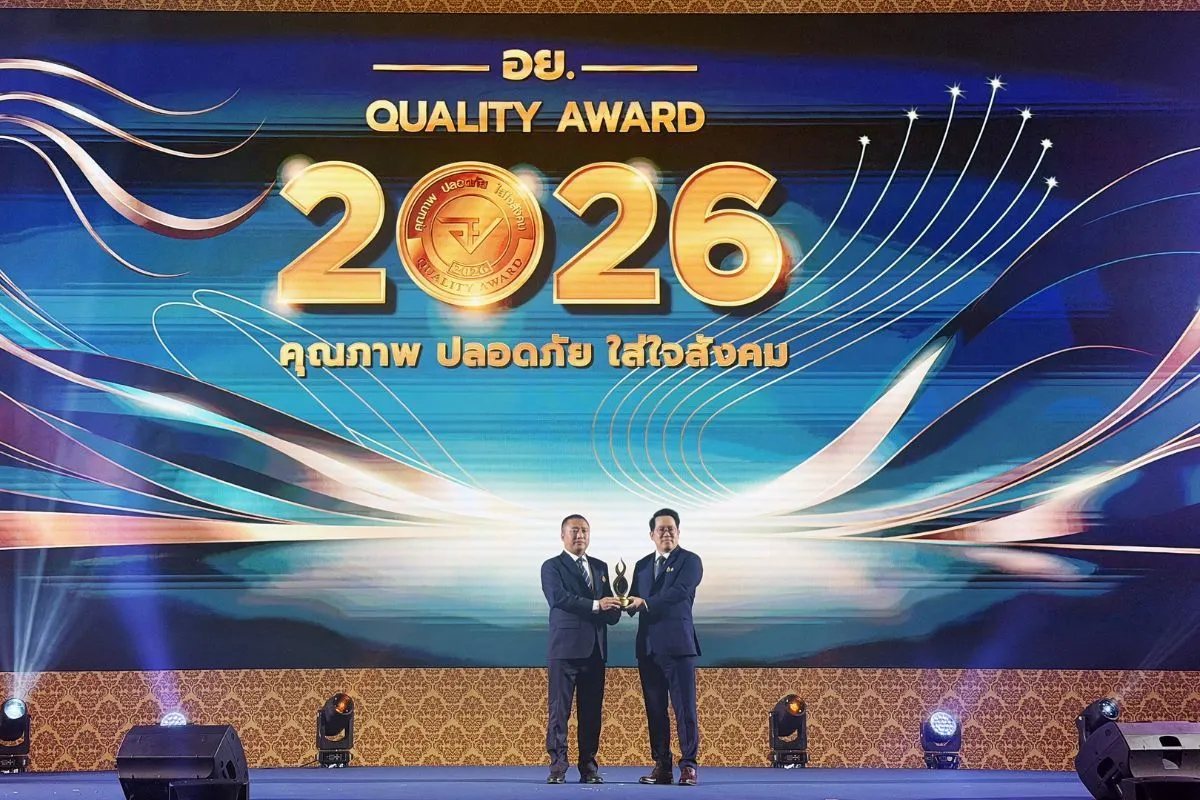
Yili receives Thailand FDA Quality Award for the seventh consecutive year, highlighting its quality management, local integration and growing presence in ASEAN.
Yili Group has once again strengthened its track record in Thailand after receiving the Thailand Food and Drug Administration (FDA) Quality Award for the seventh consecutive year. The company also secured the Best of the Best Award for the second time, following its first recognition with the distinction in 2023.
The latest achievement places quality management and regulatory compliance at the center of Yili’s continued development in Thailand, while also highlighting the company’s broader strategy of combining global standards with local market adaptation across Southeast Asia.
The Thailand FDA Quality Award is associated with standards covering areas such as product quality, regulatory compliance, manufacturing processes and consumer protection. According to the report, the evaluation process includes document reviews, field inspections by expert panels, sample testing and assessments of company capabilities.
For a multinational food company operating in Southeast Asia, maintaining compliance with national food and health regulations is an important part of building sustainable operations. Thailand’s market also provides a significant environment for companies seeking to establish regional consumer and production networks.
Combining Global Standards with Local Operations
Yili’s approach in Thailand reflects a combination of standardized quality systems and local implementation. The company applies its quality management framework alongside Thai regulatory requirements, while using digital systems to monitor different stages of its operations.
An Enterprise Resource Planning (ERP) system is used to support oversight from raw-material procurement and manufacturing to warehousing and logistics. Yili has also strengthened pretreatment processes, employee training and the management of critical control points as part of its quality-control efforts.
This combination of technology, operational procedures and workforce development is increasingly relevant to the food and beverage sector, where supply-chain traceability and consistent product standards are closely connected to consumer trust.
Yili’s experience also illustrates the importance of adapting products to local preferences. Through its Cremo ice cream brand, the company has introduced products designed around Thai consumer tastes, including varieties featuring ingredients such as nata de coco and pandan.
The company has also developed products with distinctive designs, including rabbit-ear-shaped ice cream. Such initiatives demonstrate how multinational companies can maintain a broader brand and quality framework while adapting individual products to local consumer preferences.
Local Integration Within Thailand
Beyond product development, Yili has emphasized the role of local resources in its Thai operations. Approximately 80 percent of its raw materials and supporting materials are sourced locally, while around 95 percent of its workforce in Thailand consists of Thai employees, according to the company information cited in the report.
Local sourcing and employment can contribute to stronger connections between foreign-invested companies and the economies in which they operate. For businesses expanding across ASEAN, such integration can also help companies understand local supply chains, workforce characteristics and consumer expectations.
Yili’s presence in Thailand therefore extends beyond the distribution of consumer products. Its operations involve local suppliers, employees and community initiatives, creating a broader connection with the market.
In August 2026, Yili also launched a community initiative and donated 150,000 Cremo ice cream products to the Thai government. The activity forms part of the company’s efforts to engage with local communities alongside its commercial operations.
Implications for ASEAN’s Food and Beverage Industry
The latest recognition comes as ASEAN continues to develop as an interconnected consumer and production region. For food and beverage companies, the region presents opportunities for growth while also requiring them to navigate different regulatory frameworks, consumer preferences and supply-chain environments.
Yili’s strategy in Thailand highlights several factors that can influence regional operations: regulatory compliance, digitalized quality management, local sourcing, workforce development and product localization.
These factors are particularly relevant as companies increasingly seek to build regional supply chains rather than treating each Southeast Asian market as an isolated destination.
At the same time, maintaining consistent standards across markets requires companies to balance global operating principles with country-specific requirements. Yili’s Thai operations provide one example of how that balance can be implemented through a combination of centralized quality systems and local adaptation.
Continuing Its Regional Expansion
Yili has stated that it will continue expanding its business in Southeast Asia and other international markets while maintaining quality standards and developing products and services according to local needs. The direction is aligned with the company’s stated vision, “World Integrally Sharing Health.”
The seventh consecutive Thailand FDA Quality Award therefore represents one milestone within Yili’s broader international expansion. More importantly, it illustrates the operational requirements that accompany expansion into increasingly integrated regional markets.
For ASEAN’s food and beverage industry, developments such as these underline the growing importance of quality assurance, regulatory compliance, local partnerships and consumer-oriented innovation as companies compete across national borders.