

LPPOM’s IPRA 2026 recognition highlights the importance of institutional reputation, public trust and professional halal assurance in Indonesia and ASEAN.
Indonesia’s expanding halal economy is placing greater importance on institutions capable of maintaining public confidence, professional standards and reliable assurance processes. In this environment, institutional reputation is increasingly becoming a strategic asset rather than simply a communications concern.
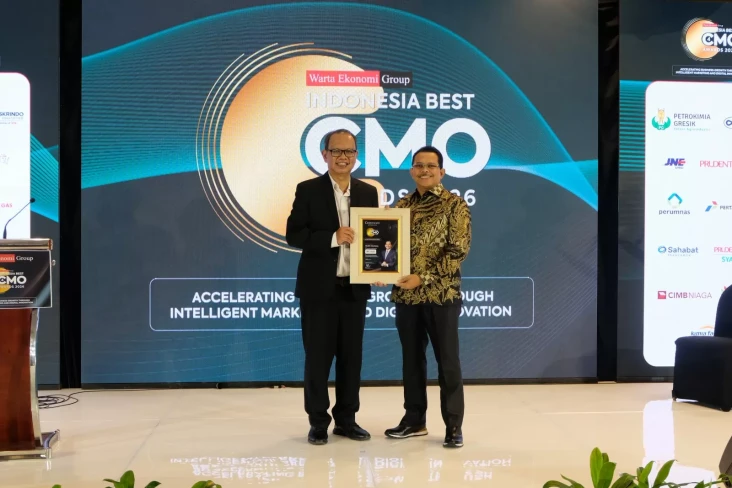
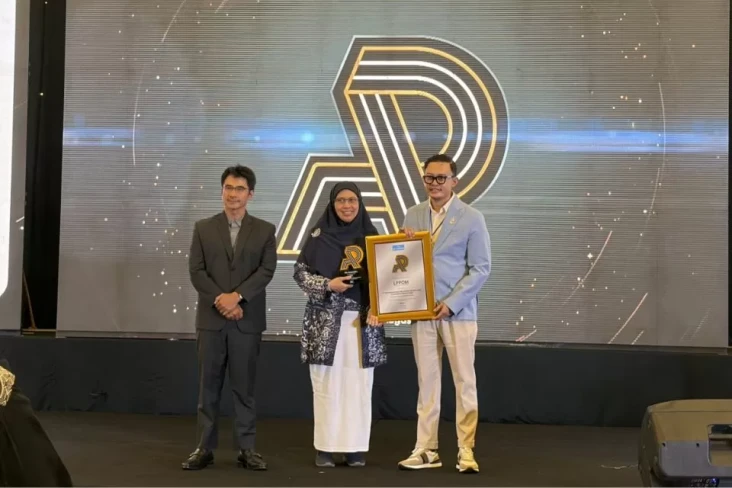
That perspective was highlighted by the recognition received by LPPOM at the Indonesia Public Relations Awards (IPRA) 2026, where the organisation was recognised in the Corporate Reputation category for the Non-Governmental Organization sector. The award was organised by The Iconomics Media with support from Axia Research.
The recognition is significant because LPPOM operates in an area closely connected with consumer confidence and the development of Indonesia’s halal ecosystem. Its activities include comprehensive examination of production processes, raw materials and halal assurance systems implemented by businesses.
For Indonesia and the wider ASEAN region, the issue extends beyond domestic certification. Halal products increasingly form part of regional trade, tourism, food and beverage industries, cosmetics, pharmaceuticals and other consumer sectors.
Reputation as an Institutional Asset
The IPRA recognition reflects a broader understanding of corporate reputation. Reputation is not created solely through public relations campaigns. It is influenced by organisational performance, leadership, professional competence and the social contribution perceived by stakeholders.
For institutions operating in the halal sector, this distinction is particularly important.
Businesses need confidence that inspection and assurance processes are conducted professionally. Consumers, meanwhile, need confidence that halal claims are supported by credible processes.
This creates a direct relationship between institutional reputation and the broader credibility of the halal ecosystem.
A Regional Dimension
ASEAN is home to markets with diverse levels of halal awareness, regulatory frameworks and consumer preferences. At the same time, the region is increasingly interconnected through trade and investment.
Indonesia, as the world’s largest Muslim-majority country and one of ASEAN’s largest economies, has an important role in the development of the regional halal economy.
The credibility of Indonesian halal institutions can therefore have implications beyond the domestic market, particularly when Indonesian businesses seek to reach consumers in neighbouring Southeast Asian countries.
For companies, trusted halal assurance can become part of a broader strategy for accessing regional markets.
From Compliance to Market Confidence
Halal assurance is often discussed in terms of regulatory compliance. However, its commercial implications are becoming increasingly relevant.
For businesses, demonstrating compliance with recognised halal requirements can help strengthen consumer confidence and differentiate products in competitive markets.
LPPOM’s laboratory services, for example, include testing and technical support for food and beverages, cosmetics, pharmaceuticals, packaging and other industries. Its laboratory states that it is accredited to ISO/IEC 17025 for various testing parameters.
This illustrates how the halal ecosystem is becoming increasingly connected with broader concepts of quality assurance.
The process is no longer limited to a single certificate. It can involve testing, traceability, production controls, training, consultation and continuous compliance.
Supporting Businesses Across the Value Chain
The development of halal industries also requires institutions capable of working with businesses of different sizes.
LPPOM’s laboratory platform states that its services are available to micro, small and medium enterprises as well as multinational companies across industries including food and beverages, cosmetics, pharmaceuticals, hospitality, packaging and distribution.
This breadth is important because ASEAN’s economic structure is dominated by small and medium-sized businesses.
If halal assurance is to support inclusive economic growth, access to professional services must extend beyond large corporations.
For SMEs, credible assurance can become a pathway to stronger market positioning and potentially wider distribution.
Trust in an Increasingly Transparent Market
Consumer behaviour is also changing.
Digital platforms allow consumers to compare products, examine company claims and share their experiences almost instantly.
As a result, organisations cannot rely exclusively on institutional authority. They need to demonstrate consistency through their actual services.
For LPPOM, this makes reputation a continuous responsibility.
The credibility of an organisation is reinforced when its public communication is consistent with its operational performance.
Indonesia’s Opportunity in the Global Halal Economy
The halal economy is increasingly connected to international trade.
Products from Indonesia can reach markets in Southeast Asia and beyond, while foreign businesses may also seek access to Indonesia’s large consumer base.
In such an environment, reliable halal assurance can facilitate commercial relationships.
Independent information on LPPOM describes halal certification as relevant not only to consumer confidence but also to market access, quality assurance and competitive positioning.
This makes institutional credibility an important component of Indonesia’s economic diplomacy in the halal sector.
The Importance of International Alignment
As halal trade expands across borders, differences between national standards and certification systems can become a practical challenge for companies.
Greater cooperation between halal institutions, regulators and industry stakeholders can help reduce unnecessary complexity.
For ASEAN, regional dialogue may become increasingly important as businesses expand supply chains across multiple countries.
Institutions with strong technical capabilities and established reputations can contribute to this process by sharing knowledge, developing professional capacity and supporting greater understanding of halal requirements.
Reputation and Leadership
The reputation of an institution is also connected to the quality of its leadership.
In LPPOM’s case, Director President Muti Arintawati has been associated with the organisation’s development in halal inspection and certification. Her leadership places emphasis on maintaining service quality, professional competence and stakeholder trust.
This reflects a broader principle relevant to institutions across ASEAN: reputation is sustained when leadership is able to translate organisational values into measurable practices.
A strong reputation therefore depends not only on what an organisation says, but on how consistently it delivers.
Building a More Competitive Halal Ecosystem
For Indonesia, the challenge ahead is to ensure that the growth of the halal economy is supported by credible institutions and professional infrastructure.
Certification bodies, laboratories, auditors, businesses, regulators and industry associations all have roles to play.
LPPOM’s recognition at IPRA 2026 offers one example of how institutional reputation can become part of this larger ecosystem.
It also highlights the connection between public trust and economic development.
Looking Beyond the Award
The IPRA 2026 recognition should not be viewed simply as an endpoint.
For LPPOM, it represents an opportunity to strengthen the systems and professional practices that contributed to the organisation’s reputation.
For Indonesia, it demonstrates the growing importance of institutional credibility as the country seeks a stronger position in the regional and global halal economy.
The next stage will require continued investment in professional competence, technology, laboratory capabilities, stakeholder education and cross-border cooperation.
Conclusion
LPPOM’s recognition at the Indonesia Public Relations Awards 2026 comes at a time when reputation and trust are becoming increasingly important in the halal economy.
The organisation’s role in examining production processes, raw materials and halal assurance systems places it within a broader infrastructure of consumer confidence and business compliance.
For ASEAN, the development is relevant because halal markets are increasingly connected through trade, investment and regional supply chains.
As Indonesian companies pursue wider market opportunities, strong institutional credibility can help support that expansion.
Ultimately, reputation is not simply about how an organisation is perceived. It is the accumulated result of professional standards, consistent performance and the confidence of stakeholders.
For LPPOM and Indonesia’s wider halal ecosystem, maintaining that confidence will be essential as the region moves toward an increasingly integrated and competitive halal economy.
Sources
SINDOnews — Reputasi dan Kepercayaan Jadi Fondasi Penting bagi Organisasi