

Telkomsel receives three global recognitions at TM Forum DTW Ignite 2026, highlighting Indonesia’s growing role in AI, autonomous networks and digital resilience across ASEAN.
JAKARTA — Southeast Asia’s telecommunications sector is entering a new phase of digital transformation, with artificial intelligence (AI), automation and autonomous networks becoming increasingly important to network resilience and customer experience.
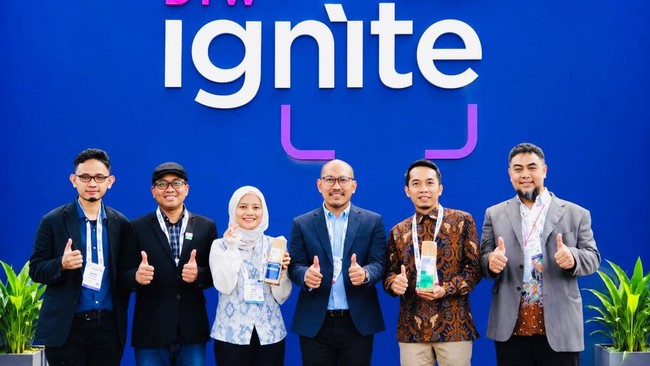
Indonesia’s Telkomsel is emerging as one of the regional operators actively advancing this transition. At TM Forum Digital Transformation World (DTW) Ignite 2026 in Copenhagen, Denmark, the company received three global recognitions linked to AI, digital resilience, industry collaboration and autonomous network development. The event was held from 23 to 25 June 2026 and brought together more than 5,000 industry participants from over 100 countries.

The recognitions included the TM Forum Excellence Awards 2026 in the Excellence in People, Profit, and Planet category for its AI-powered early warning system, a Catalyst Innovator Recognition with the “Visionary” distinction, and Autonomous Network Level 4 (ANL-4) Alpha Validation. Telkomsel says it is the first operator in Indonesia and the third in Southeast Asia to receive the ANL-4 validation.
The achievements are significant beyond corporate recognition. They reflect a broader regional trend in which telecommunications operators are seeking to move from conventional network management toward increasingly intelligent, automated and predictive infrastructure.
AI Moves Closer to Critical Infrastructure
One of Telkomsel’s recognised initiatives is its AI-Powered Early Warning System, designed to identify potential disaster impacts at an earlier stage and accelerate the company’s response.
The system integrates internal and external data for monitoring, analysis and dissemination of critical information through multiple channels. According to Telkomsel, it has detected thousands of incidents, reached hundreds of cities and delivered millions of alerts.
For Southeast Asia, where countries face recurring risks from floods, earthquakes, landslides, storms and other natural hazards, the application of AI to telecommunications resilience carries particular relevance.
Telecommunications infrastructure increasingly serves as a critical layer of economic and social infrastructure. During emergencies, connectivity can support public communication, coordination and access to information.
The integration of AI into early-warning and continuity systems therefore represents a shift in how operators define network performance. Reliability is no longer measured only by normal-day availability, but also by how effectively infrastructure can respond to disruptions.
Autonomous Networks and Regional Competitiveness
Telkomsel’s ANL-4 validation offers another indication of where the regional telecommunications industry is heading.
Traditional network operations rely heavily on human monitoring and intervention. As networks become more complex and data traffic continues to grow, this model can become increasingly difficult to sustain at scale.
Autonomous networks seek to address that challenge by enabling systems to monitor conditions, identify potential problems and initiate appropriate responses with progressively less manual intervention.
Telkomsel achieved its ANL-4 Alpha Validation through the application of AI to service-quality management using its NPS Improvement with AI for Autonomous by TAZ solution. The company says the implementation allows network conditions to be monitored more automatically, potential disruptions to be detected earlier and service quality to be managed more responsively.
The development places Indonesia within a wider Southeast Asian movement toward increasingly intelligent network infrastructure.
Why the ASEAN Context Matters
The Southeast Asian telecommunications market is diverse, with operators serving densely populated metropolitan areas as well as remote islands and geographically challenging communities.
This diversity creates a strong incentive for automation.
A network that can identify anomalies and respond to problems faster can potentially improve operational efficiency while supporting more consistent customer experiences across different geographic environments.
For Indonesia, the challenge is particularly significant because of its vast archipelagic geography.
AI-driven network management can potentially help operators process large volumes of information and respond to changing network conditions more efficiently, although successful deployment still depends on data quality, infrastructure integration, cybersecurity and effective governance.
Collaboration Beyond National Borders
Telkomsel’s second major recognition also highlights the importance of cross-border collaboration.
Through the TM Forum Catalyst programme, Telkomsel has worked with technology partners and communications service providers on initiatives involving AI, Open Digital Architecture, autonomous networks and customer experience. Its contribution received a Visionary recognition in the Catalyst programme.
This model is increasingly relevant to ASEAN.
Digital infrastructure does not operate within isolated national boundaries. Technology standards, cloud infrastructure, cybersecurity frameworks and digital services increasingly involve international ecosystems.
Collaborative platforms such as TM Forum provide companies from different markets with opportunities to test ideas, develop common approaches and accelerate technology adoption.
For regional operators, such collaboration can reduce the gap between technological innovation and practical implementation.
Building Digital Resilience
Telkomsel’s initiatives also illustrate how telecommunications is becoming closely connected to the concept of digital resilience.
For governments and businesses across ASEAN, connectivity is increasingly essential to economic activity. Digital payments, logistics, public services, remote work, education and commerce all depend on reliable networks.
A network disruption can therefore have consequences well beyond telecommunications.
Telkomsel Network Director Indra Mardiatna said the company is using AI and autonomous networks to identify potential disruptions earlier and accelerate responses, with the objective of building more intelligent and resilient networks.
This approach aligns telecommunications performance with broader national resilience objectives.
The Human Dimension of AI
While AI is increasingly central to telecom transformation, the technology does not eliminate the need for human leadership.
Telkomsel IT Director Joyce Shia has emphasised that AI delivers meaningful impact when supported by integrated and trusted data and systems. The company also positions responsible AI as part of its effort to improve customer experience while supporting more inclusive and sustainable digital development.
This principle is particularly relevant for Southeast Asian markets.
The region includes countries at different stages of digital development, with significant variations in infrastructure, regulatory frameworks and digital literacy.
Technology deployment therefore needs to be accompanied by responsible governance, strong data foundations and attention to accessibility.
From Network Automation to AI-Native Operations
The direction of the industry is increasingly moving beyond simple automation.
Automation typically follows predefined rules. AI-enabled systems, by contrast, can analyse larger volumes of information and identify patterns that may not be immediately apparent through conventional monitoring.
That distinction is important for operators managing increasingly complex networks.
TM Forum itself has positioned AI-driven transformation, autonomous networks and collaboration as central themes of DTW Ignite 2026. At the opening of the event, TM Forum Chairman Steffen Roehn called on the telecommunications industry to accelerate collaboration and AI-driven transformation while strengthening trust, security and governance.
This reflects an emerging industry consensus: AI will increasingly influence not only network operations, but also the role telecommunications companies play in the broader digital economy.
A Regional Signal from Indonesia
Telkomsel’s ANL-4 achievement is particularly relevant from an ASEAN perspective because it places an Indonesian operator among the early adopters of advanced autonomous-network capabilities in the region.
The company describes itself as the first operator in Indonesia and the third in Southeast Asia to receive the validation.
While such recognition does not by itself determine commercial success, it provides an indication of technological maturity.
The larger question is how these capabilities can be translated into measurable benefits for customers and businesses.
For operators, the ultimate objectives remain familiar: better network quality, faster response, greater resilience and more efficient operations.
Implications for Businesses
The evolution toward AI-driven telecommunications also has implications for enterprises across ASEAN.
Businesses increasingly rely on connectivity for cloud applications, digital payments, customer engagement, logistics and data-intensive operations.
More intelligent networks could eventually provide enterprises with greater reliability and more responsive services.
For industries operating across multiple markets, this could become an important competitive consideration as digital infrastructure becomes increasingly integrated into business strategy.
Telecommunications providers, in turn, may increasingly compete not only on coverage and pricing but also on their ability to provide intelligent, resilient and programmable connectivity.
The Next Stage of Regional Transformation
The three recognitions received by Telkomsel should therefore be viewed in the context of a much larger regional transformation.
AI is moving from experimental applications toward operational systems. Autonomous networks are progressing from long-term concepts toward validated implementations. And cross-border collaboration is becoming increasingly important as telecommunications intersects with cloud computing, cybersecurity and digital platforms.
For ASEAN, these developments create both opportunities and challenges.
The opportunity lies in building a more resilient digital economy supported by intelligent infrastructure.
The challenge lies in ensuring that technological progress is accompanied by appropriate standards, cybersecurity safeguards, skilled talent and responsible governance.
Looking Ahead
Telkomsel’s experience illustrates how an operator can combine AI, automation and international collaboration to address both business and infrastructure challenges.
Its early-warning system links AI to disaster preparedness. Its autonomous-network programme addresses network complexity. Its participation in TM Forum Catalyst demonstrates the importance of international collaboration.
Together, these initiatives suggest that the next generation of telecommunications will be defined not simply by faster networks, but by smarter and more resilient infrastructure.
For Southeast Asia, that shift could become an important component of the region’s broader digital transformation.
Telkomsel’s three global recognitions at DTW Ignite 2026 therefore represent more than an achievement for one Indonesian company. They offer a glimpse into the direction in which ASEAN’s telecommunications sector is moving—toward networks that are increasingly intelligent, collaborative and capable of supporting a more resilient digital economy.
Sources
CNN Indonesia — Telkomsel Raih Tiga Pengakuan Global di TM Forum DTW Ignite 2026